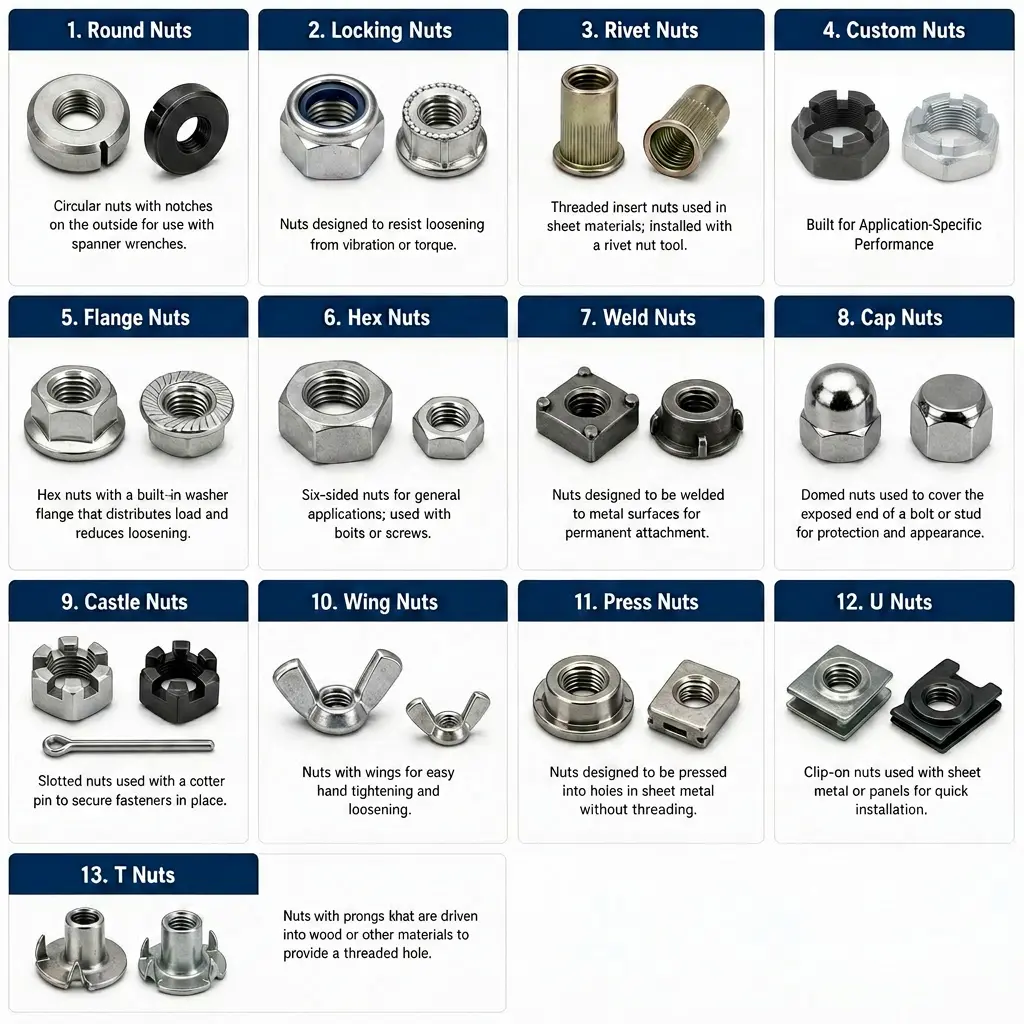











The bolt requires a nut to connect the two parts together, whereas the screw can drive itself into the material.
This one mechanical characteristic forms the basis for nearly every other attribute of the design, testing, and selection of the two fasteners.
It will inevitably come up as any engineer looks to source these fasteners for machinery, construction projects, and furniture assembly.
These words are often used interchangeably in everyday language, but there is a bolt vs screw difference that everyone needs to know.
What Is a Bolt? Definition and Mechanism
A bolt can be described as a type of fastener with a thread used for insertion through a pre-drilled hole into two or more objects that require fastening. The other component that complements it is the nut that screws onto its end.
Since it uses tension for holding purposes, bolts are considered suitable for use in joints that experience stress, vibrations, and loading cycles. Some common examples include steel structures and machinery mounting points.
Types of Bolts
Hex bolts, carriage bolts, and U-bolts each play an important role in providing clamping force for different purposes. Hex bolts are considered standard fasteners in connecting structural steels using standards like ASTM A325.
The most popular materials for bolts are carbon steel, alloy steel, or stainless steel. The grade number of the bolt is shown on its head, which represents tensile strength.

What Is a Screw? How It Differs from a Bolt
A screw makes its own way of threading when screwed into wood, metal, or plastic. In addition, a nut is not required because the screw itself threads into the surface.
And this is precisely the fundamental difference between bolts and screws that engineers utilize. A bolt connects two surfaces through the tension created with a nut. At the same time, a screw fastens itself through threading of its own inside a solid material.
There are many types of screws and screw heads, such as Phillips, flathead, and Torx. Wood screws, sheet metal screws, and self-tapping screws suit different materials.
Since a screw threads itself into the surface material, it is easier to install, and there are fewer components needed. This feature brings a disadvantage to screws regarding resistance to loads.

Bolt vs Screw: Side-by-Side Comparison
The table below lays out the practical differences buyers and engineers usually ask about.
| Feature | Bolt | Screw |
| Installation | Requires a nut and often a washer. | Threads directly into material. |
| Load type | Best for tension and shear loads. | Best for lighter, static loads. |
| Removability | Easy to remove and reuse. | Can strip threads after repeated removal. |
| Typical use | Structural steel, machinery, flanges. | Wood, drywall, sheet metal, furniture. |
| Strength profile | Higher clamping force under vibration. | Lower shear strength, good for pull-out resistance. |
Screw vs bolt strength comparisons usually favor bolts in high-vibration or heavy-load settings.
For lighter assemblies, a properly sized screw performs well and avoids the added weight and cost of a nut and washer.
Anyone weighing screw vs bolt strength for a specific project should also factor in the base material, since even a strong bolt underperforms in soft or thin substrates.
When to Use a Bolt vs a Screw in a Project
This choice hinges on the material, the weight, and the need to dismantle the joint later on.
Use a Bolt When
A bolt is best suited to structural steel frame construction, machine building, and connections that will encounter periodic vibration.
Bridges, industrial machines, and chassis parts almost always call for a bolt in these situations.
They are also useful when disassembly is needed at some point in the future to replace parts, because a bolted joint can be repeatedly tightened and loosened without affecting the materials.
Use a Screw When
For light constructions like furniture, wall panels, cabinets, and sheet metal enclosures, a screw is a better option.
Another advantage is that self-tapping screws allow you to skip the hole drilling process for installing a nut in line production.
Finally, for outdoor and corrosion-sensitive applications, stainless or coated screws last longer than bolts without the extra weight.
Can a Bolt Be Used as a Screw? Common Hybrid Fasteners
There exist hybrid fasteners that have some characteristics of bolts and others of screws.
For instance, a lag bolt can be identified by its point and coarse threads like those found in screws. Although they can be installed using a wrench just like bolts.
The above leads to another important concept to understand: what is the difference between a bolt, a screw, and a stud? The latter has threads at both ends and no heads whatsoever; it is used with either two nuts or a nut and a tapped hole.
Studs are commonly used in flanges and engines where one of the ends is threaded permanently into a housing. It’s important to know the differences between bolts, screws, and studs so as not to order the wrong components for your assembly project.
Most manufacturers of fasteners offer their customers a wide array of options. That includes bolts, screws, and studs, because most assembly projects use a combination of the three.
Bolt vs screw vs stud should always be distinguished at the ordering phase.
FAQ
Is a Bolt Stronger Than a Screw?
Yes, if a comparison is made between the two. The bolt tends to withstand higher levels of shear and tensile stress because of the equal distribution of load due to the interaction between the nut and bolt. Nevertheless, there is an impact of the size, material type, and grade on durability.
What Is the Major Distinction between a Bolt and a Screw?
The bolt combines with a nut when assembling components from opposite sides. The screw, in turn, penetrates the component by itself and does not require a nut.
Is it Possible to Substitute a Screw for a Bolt?
Not really in the case of a structural steel joint because it is common practice to use bolts as their resistance to shear and vibration is higher compared to screwed connections.
Are Bolts Cheaper Than Screws?
It is rather the other way around, as bolts include two parts – the nut and even a washer, while screws have one and are therefore cheaper and easier to mount.
Are the Sizes and Specifications the Same for Both Parts?
The standards used for measurements (ANSI, ASTM, or ISO) are the same for both parts; however, the chart of sizes differs for bolts and screws.
When working on a project with certain load demands, the issue of grade becomes important rather than whether the part is a screw or a bolt.
The manufacturer that provides the information about grade marking and certification will prove useful for the purposes of your project.